
Ayurvedic Herbs and the Rasayana Tradition
Rejuvenation through time-tested botanical wisdom.

Kushal K
11 Nov 2026 • 7min
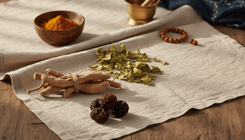
Rasayana is the Ayurvedic science of rejuvenation through herbs and practices that restore vitality and slow the pace of aging. The word rasayana comes from rasa, meaning the essential fluid or the tissue that forms the base of life, and ayana, meaning the path or channel. Together, rasayana means the path of nourishing rasa—the foundational tissue from which all other tissues grow. When practitioners speak of ayurvedic herbs for traditional wellbeing, they are often talking about the herbs used in rasayana.



What Rasayana Means in Ayurveda
In Ayurvedic thinking, ageing and disease do not strike randomly. They begin when the quality of rasa declines. Rasa is not blood; it is what the digestive system produces from food that is well-nourished and well-digested. When rasa is depleted or weakened, the body cannot repair itself. The tissues become thin, the mind grows dull, and immunity drops. Rasayana addresses this by using specific herbs to restore rasa and to strengthen the body's own capacity to digest and assimilate nutrition.
Rasayana is not a single remedy but a tradition. It names both the herbs and the way of life that supports them. A person pursuing rasayana eats at the right times, moves gently, sleeps well and keeps the mind calm. The herbs alone cannot work if the daily rhythms are broken. This is why Ayurvedic texts place rasayana among the eight branches of medicine, alongside surgery, internal medicine and treatment of the senses. It is considered foundational to a long, vigorous life.
The Core Rasayana Herbs
Several herbs appear again and again in rasayana practice. Ashwagandha, also called withania somnifera in Sanskrit, is one of the most recognised. Ashwagandha root is bitter, warm and grounding. It is used to rebuild strength after illness, to steady the nervous system and to support the body's response to stress. The traditional use of ashwagandha goes back at least to the time of the Charaka Samhita, a foundational Ayurvedic text. It is typically taken as a powder mixed into warm milk or ghee.
Brahmi, whose botanical name is bacopa monnieri, is the classic herb for the mind. It is cool, slightly bitter and sweet. Brahmi is said to clear mental fog, to sharpen memory and to support clear thinking. In Ayurvedic practice, brahmi is often taken as a powder, as a ghee infusion, or in water-based preparations. Like ashwagandha, brahmi appears in classical Ayurvedic texts as a rasayana for the mind specifically.
Shatavari, the root of asparagus racemosus, is considered the female rasayana in many Ayurvedic schools. It is sweet, cool and nourishing. Shatavari is used to support fertility, to ease transitions in a woman's life, and to strengthen the reproductive tissues. The name itself means "one who has a hundred roots"—suggesting its capacity to nourish many aspects of wellbeing.
Bhringraj, called eclipta alba in botanical terms, is the herb for hair and bone tissue. Its name means "king of herbs for the hair". Bhringraj oil is pressed from the plant and massaged into the scalp and the roots of the hair. It is also taken internally as a powder to support bone strength and to nourish the tissues from within.
Haritaki, the fruit of terminalia chebula, is a rasayana that works across all three doshas—the three constitutional types in Ayurveda. It is sometimes called the king of herbs because of its broad usefulness. Haritaki gently promotes digestion, supports the colon and strengthens immunity. It is often made into a powder or a paste and taken with warm water.
Amalaki, which is the Indian gooseberry or phyllanthus emblica, is one of the richest natural sources of vitamin C. In Ayurvedic rasayana, amalaki is used to support the immune system, to strengthen vision and to cool and nourish the tissues. Amalaki powder is mixed into water or warm milk, and amalaki jam, called murabba, is a traditional rasayana preparation that tastes like a preserve.
How Rasayana Fits into Daily Life
Rasayana is not something you take only when you are sick. It is a long-term practice. A person might take an ashwagandha tonic through the cold months, then switch to brahmi during the heat of summer. Some practitioners adopt one herb for a season, or a year. The idea is to work gently and steadily with the herbs, allowing the body to rebuild over time.
The dosage and the form depend on your constitution and the season. A powder mixed into ghee or milk is the most common way. Some people prefer to simmer the herbs gently in water or milk to make a decoction. Others buy commercial rasayana churnas—herbal powders designed to be mixed easily into food or drink. The strength of your digestion also matters. If your digestion is weak, you might take less of the herb or prepare it in a way that is easier to process.
Rasayana also means eating the right foods and keeping a rhythm in your day. This might mean eating at the same times each day, sleeping before 10 pm, doing gentle movement in the morning, and spending a few moments in quiet before breakfast. The Ayurvedic physicians say that without these habits, the herbs are working against the current. With them, the herbs support what the body is already trying to do.
Rasayana and the Three Doshas
Ayurveda recognises that people have different constitutions, and some rasayana herbs work better for one person than another. Vata types—people who run cold, dry, and anxious—often benefit most from warming, grounding herbs like ashwagandha. Pitta types—those who run hot and intense—respond well to cooling herbs like brahmi and amalaki. Kapha types—those who tend toward heaviness and stagnation—do well with stimulating herbs like bhringraj and haritaki, which move stagnation and lighten the tissues.
A qualified Ayurvedic practitioner will match the rasayana to your constitution and your current state of balance. Taking the wrong herb for your type will not harm you, but it may not help as much as you hope. This is why learning your dosha—your constitutional type—is the first step in a rasayana practice.
When to Expect Results
Rasayana is not like taking a painkiller. The results come gradually. You might notice, after four to six weeks, that you sleep more deeply, that your skin feels clearer, or that you have more energy in the afternoon. After a few months, the shifts become more noticeable: better digestion, steadier mood, sharper thinking. Some people take a rasayana for a whole season before they consciously notice a change. The work is happening in the tissues, which renew themselves on their own timeline.
This is why Ayurvedic texts recommend practising rasayana for at least 100 days—roughly three months—if you want meaningful results. Shorter courses can support you, but the deeper rejuvenation takes longer. Think of rasayana as an investment in your body's capacity to repair and maintain itself over many years.
Common questions
How long does it take to see results from rasayana herbs?
Results typically appear after four to six weeks, though deeper rejuvenation takes longer. Ayurvedic texts recommend practising rasayana for at least 100 days—roughly three months—for meaningful tissue-level changes.
Can I take multiple rasayana herbs at the same time?
Yes, many traditional rasayana formulas combine several herbs. However, begin with one herb at a time so you can understand how your body responds. A qualified Ayurvedic practitioner can design a combination suited to your constitution.
Do rasayana herbs work if I do not follow an Ayurvedic daily routine?
The herbs will support you, but Ayurvedic texts emphasise that rasayana is a way of life, not just a supplement. Without regular sleep times, good digestion and mental calm, the herbs are working against the body's existing imbalances and will not reach their full potential.

Related Articles


