
Annaprashan: The First Rice Ceremony
Welcome solid food, bless the child's growth

Sunil Chaurasia
09 Nov 2026 • 6min
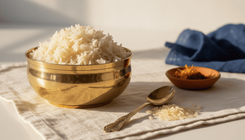
Annaprashan is the Hindu samskara (life ritual) that marks the moment a child first tastes solid food, usually rice. The word means "eating of food" - anna being grain or food, and prashan being to feed or consume. In traditional practice, this ceremony blesses the child and the new stage of nourishment, making it a joyful family occasion as much as a spiritual one.
The annaprashan ceremony typically takes place between five and seven months after birth, though different families and regions follow different timings based on their traditions or when the child shows readiness. Rather than a fixed date, it is timed to the child's development. The exact age varies by samskara tradition and family custom, but the principle is the same: the ritual welcomes the child's growth into a new chapter.



What Annaprashan Means
Annaprashan is one of the samskaras, the life milestones marked in Sanatan Dharma that shape a person's journey from birth through childhood into adulthood. Samskaras are not merely ceremonies; they are believed to refine and protect a person's progress. The annaprashan particularly marks a threshold: from milk alone to shared food, from complete dependence to the beginning of independence.
In many traditions, rice holds special significance. Rice (or sometimes wheat) is prepared with ghee, jaggery, and other auspicious ingredients. Some families add fruits or honey. The blessing of this first food is meant to nourish not only the child's body but also their capacity to absorb experience and wisdom. The family gathers to witness and support this transition, and the child eats in the presence of elders and, in many cases, in front of a home altar or the family's chosen deity.
Timing and Readiness
The age at which annaprashan is performed varies by tradition. Commonly, it takes place between five and seven months; some families prefer six months, others wait until closer to eight months or a year, depending on the samskara system they follow. A few traditions mark it at different milestones entirely. The child's physical readiness also matters: the ritual is timed to when the baby can sit upright and shows interest in food.
Some families also consider the panchanga (lunar calendar) and consult with a family priest or astrologer to choose an auspicious day. This is a personal choice and varies widely. What matters most is that the family feels ready and the child is developmentally prepared to taste and swallow semi-solid food safely.
How the Annaprashan Ceremony is Performed
The ceremony itself is flexible and shaped by family tradition, caste, region and preferred guru or sampradaya. There is no single "correct" way, but certain elements appear often.
The ritual usually begins with preparation of the food - most commonly rice cooked with ghee and jaggery, sometimes with milk or yogurt to make it soft and smooth. Some families add small amounts of fruit or honey. The food is blessed and often offered to the family deity or the sun before the child tastes it. A senior family member - often the father, grandmother, or a respected elder - feeds the first spoonful to the child while mantras are chanted. These mantras typically call for the child's strength, health, long life, and good fortune.
After the first ceremonial taste, the child may eat a small quantity of the prepared food. Some families follow this with other gifts or blessings, such as presents, donations to the temple or the needy, or a small gathering of family and friends. The specific rituals and scale of celebration depend entirely on family preference.
Regional and Sampradaya Differences
Annaprashan practices vary across India and among different Hindu communities. Some southern traditions include the ritual of offering rice at a temple before performing it at home. In parts of North India, the ceremony may include specific mantras from the Vedic tradition. Certain families tie the ceremony to the lunar calendar or the child's birth nakshatra (birth star), while others simply choose a day that feels right.
The food offered also differs by region. While rice is most common in the south and east, wheat or ragi (finger millet) may be used in other areas. Some communities include savoury elements like lentils or vegetables alongside or instead of the sweetened rice. These variations reflect the diversity of Sanatan Dharma and the principle that ritual adapts to locality and community while preserving its essential meaning.
Practical Preparation
If you are planning an annaprashan for your child, begin by speaking with your family elders, a family priest or astrologer if that is your tradition, or a trusted elder in your community. They can guide you on the timing, the foods to prepare, the mantras to use, and the customs specific to your family or sampradaya.
Prepare the food with care and clean intention, ideally a day before or on the morning of the ceremony. Keep the quantity small - a few spoonfuls is all the child needs. Have the home altar ready if you use one, or simply prepare a quiet, calm space. Invite family members you wish to have present, but keep the occasion intimate and relaxed. The goal is a joyful blessing, not a source of stress.
Remember that the child's comfort and safety come first. If the child refuses the food or becomes distressed, there is no harm in pausing and trying again another day. The ritual serves the child's wellbeing, not the other way around. Many families find that the simplest ceremonies - a quiet moment with an elder, a blessing spoken with love, and the child's first taste of solid food - carry the most meaning.
Common questions
At what age should annaprashan be performed?
Annaprashan typically takes place between five and seven months after birth, though different samprayas and families follow different timings. Some wait until eight months or closer to a year. The key is both the child's age and their physical readiness to sit upright and taste soft food safely.
What food is given during annaprashan?
Rice cooked with ghee and jaggery is most common, though wheat or finger millet may be used in some regions. The food is usually prepared soft and smooth, sometimes with additions like milk, yogurt, or small amounts of fruit or honey. The exact preparation varies by family and regional tradition.
Can annaprashan be done at home or does it need to happen at a temple?
Annaprashan can be performed at home with family members present; this is the most common practice. Some families may visit a temple before or after the home ritual, but the ceremony itself is typically a family affair held in a home setting.

Related Articles


