
Anant Chaturdashi: The Eternal Thread and the Fourteenth Day
Devotion Without End, Bound in Thread

Kushal K
13 Nov 2026 • 7min
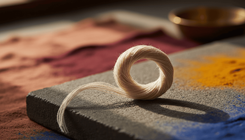
Anant Chaturdashi is the fourteenth lunar day of the dark fortnight in the month of Bhadrapada, and on this day many Hindus tie the anant sutra—a sacred thread—around their wrist as a symbol of endless devotion to Vishnu. The practice is observed with particular care in western and northern India, though the thread's meaning remains constant wherever it is worn: eternity, protection and the unbroken bond between the soul and the divine.
The day falls not long after Ganesh Visarjan, when clay idols of Ganesh are immersed in water to mark the end of Ganesh Chaturthi. Because these observances happen close together in the lunar calendar, many households connect them—saying goodbye to Ganesh while turning their attention to the eternal form of Vishnu—but they are distinct festivals with their own stories and significance.



Vishnu's Endless Form
The anant sutra is tied in honour of Vishnu's Ananta, the infinite. In Hindu philosophy, Ananta is not only a name but a concept: the endless nature of the divine, the way the universe itself returns to the formless void only to be born again. Vishnu rests upon Ananta Shesha, the cosmic serpent whose coils hold all of creation, and this image of serpentine infinity—without beginning or end—lives in the symbolism of the thread.
When you tie the anant sutra, you are tying yourself into that infinite cycle. The thread becomes a reminder that time, like the thread, has no break in it. Each day leads to the next, each life to the next, and all of it held together by Vishnu's sustaining force. This is why the thread is worn most often on the right wrist, close to the heart side of the body in many traditions.
The colour of the thread varies. In some regions it is white or cream, in others yellow or saffron. Some people tie a simple thread, while others use one stranded with beads or tied in a knot. What matters is the intention: that you wear it as a sign of your wish to live in harmony with the endless cycle of dharma.
The Connection to Ganesh Visarjan
Anant Chaturdashi falls only days after the immersion of Ganesh idols. This proximity has woven the two observances together in the folk practice of many families, especially in Maharashtra. On the same day or the day after Ganesh Visarjan, families process to a river or lake to immerse the idol in water—a ritual called visarjan—which means farewell or dissolution.
The immersion is not seen as destruction but as return. The clay that was shaped into Ganesh's form returns to earth and water. In the same spirit, Anant Chaturdashi invites you to look beyond that farewell and recognise what does not dissolve: the divine presence that exists beyond any form. While Ganesh's physical idol is released to the waters, Vishnu's infinite nature remains woven into the thread you tie.
Some people perform both acts in a single day of worship, visiting the water for Ganesh Visarjan in the morning and tying the anant sutra in the afternoon. Others observe them separately but hold them as parts of one season of devotion. Neither approach is more correct; both reflect the calendar and the heart of the practitioner.
How the Anant Sutra Is Tied
The thread is usually tied by a family member or a priest, with a simple knot or a series of knots. As the thread goes on, many people recite the names of Vishnu or a simple prayer expressing their devotion. The most common prayer acknowledges Ananta—the infinite form—and asks for protection and guidance through the endless cycles of life.
The thread is worn continuously, often for weeks or months, until it frays or comes loose naturally. Some people remove it on a specific day; others let it fall away when it will. There is no prescribed length of time. The practice is not about the physical duration of the thread but about the intention it carries: a conscious renewal of your awareness of the infinite within you and around you.
In some households, the thread is tied on all family members, including children. In others, it is tied only on adults who wish to observe the vrat, or fast, associated with the day. Fasting on Anant Chaturdashi—eating only fruits, milk products or light foods—is optional and varies by region and family custom. Many people fast to deepen their spiritual practice on the day, while others simply wear the thread as their observance.
Regional and Family Variations
The details of Anant Chaturdashi observance shift across India. In Gujarat and Maharashtra, the day is marked with particular devotion, and the tying of the thread is common and widespread. In other regions, the practice is less prominent in public culture but still observed in private homes by families who have carried the tradition forward.
Some sampradayas, or schools of Hindu thought, emphasise Anant Chaturdashi as a day to reflect on the concept of moksha—liberation from the cycle of birth and death—and the role of Vishnu's infinite grace in that liberation. Others focus more on the protection the thread is said to offer in daily life. Both interpretations are valid and rooted in the same underlying wisdom about infinity and devotion.
The thread itself is sometimes bought from temples or spiritual shops, where it may be pre-consecrated with mantras. Other people use a simple cotton thread they have chosen themselves. What matters is that the thread is tied with awareness and reverence, not that it comes from any particular source.
Carrying the Thread Forward
The anant sutra remains on your wrist as a daily touchstone. When you see it or feel it, it serves as a reminder to pause—to notice the continuity of your own life, the way each moment connects to the next, and the way the divine sustains all of it. This is the real power of the practice: not a magical protection, but a gentle discipline of remembrance.
After Anant Chaturdashi, you may find yourself more attentive to the cycles in your own life—the seasons, the lunar months, the patterns that repeat and deepen. The thread teaches this attentiveness. It is a simple object, but it carries within it one of Hinduism's deepest insights: that the universe is not a series of separate moments but one continuous, eternal flow, and that your life participates in that flow.
When the thread eventually wears through and falls away, you may choose to tie another one, or you may reflect on what you have carried and learned. Either way, the practice remains open to you, available each year when Anant Chaturdashi returns.
Common questions
What day is Anant Chaturdashi in 2024?
Anant Chaturdashi falls on the fourteenth day of the dark fortnight in Bhadrapada, which changes annually because it follows the lunar calendar. To find the exact date for a particular year, check a Hindu panchanga (calendar) or temple announcements for your region.
Can anyone tie the anant sutra?
Yes, there are no strict restrictions. In some families, the thread is tied on all members including children; in others, only on adults who wish to observe the vrat. The practice is open to anyone who wishes to observe it with devotion.
What should I do with the thread when it wears out?
Most people let the thread fall away naturally. There is no requirement to remove it on a specific day or to perform a special ritual. When it has served its time and frays, you may simply let it go, or tie a new one if you wish to renew your practice.

Related Articles


