
Akshat: Why Unbroken Rice Grains Are Used in Puja
The grain of wholeness offered in devotion

Kushal K
14 Nov 2026 • 7min
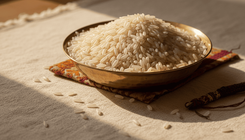
Akshat—unbroken rice grains—are among the most visible offerings in Hindu puja. You will see them scattered on the altar, held in the palm during prayers, offered at temple ceremonies and used in auspicious rituals across the Indian subcontinent. They appear so often that their presence can seem simple, even taken for granted. Yet akshat carry layered meaning: they represent wholeness, fertility and prosperity, and they connect each worshipper to countless generations of those who have made the same offering before them.



The Symbolism of Wholeness
The foundation of akshat's use lies in what the grain represents. An unbroken rice grain is whole, complete and undamaged. In the language of ritual, this wholeness becomes symbolic. When you offer akshat, you offer something perfect and untouched by harm. Unlike rice that has been husked, broken or ground into flour, akshat remains in its original form—and that intactness matters.
This is why akshat cannot be any rice grain. The specification is precise: the grain must be unbroken. If it has been cracked or split during harvest or storage, it does not serve the purpose. The act of breaking or damaging the grain would contradict the very meaning of the offering. Ritual precision here is not arbitrary: it flows directly from the symbolism. You are saying, through your offering, "I bring what is whole and perfect."
The wholeness of akshat also suggests integrity and completeness in the person making the offering. When you place these grains before the deity or the sacred flame, you are, in a sense, offering your own wholeness—your intention unmixed, your devotion undivided.
Fertility, Prosperity and Abundance
In many Hindu traditions, rice itself is sacred. It is a staple grain, the foundation of food security and nourishment across the subcontinent. Rice paddies flooded with water are among India's most recognisable agricultural landscapes, and rice has been cultivated here for thousands of years. Akshat, as whole and unbroken grains of rice, carry this association with abundance and fertility.
When akshat are offered or scattered—as they are in many pujas and rituals—they evoke blessing for prosperity and good harvests. In wedding ceremonies, akshat are scattered over the bride and groom as a prayer for abundance in their new household. At home pujas and temple offerings, they are used to petition for well-being and material security. The grain's connection to the earth and to the annual cycle of growth makes it a natural symbol for the continuity and increase that communities seek.
This symbolic use reflects the practical reality of agricultural life. For centuries, grain stored safely was security itself. Akshat, being whole and unbroken, also suggests the preservation of what is valuable—grain kept intact rather than consumed, a small portion set aside as sacred offering to honour what sustains life.
Akshat in Major Pujas and Rituals
Akshat appear across the spectrum of Hindu ritual practice, each context giving them slightly different emphasis. In the Sandhya Vandana (the daily prayer ritual observed by many Hindus), akshat are held in the palm during offerings and prayers. In temple pujas, they are scattered on the altar and sometimes offered directly to the deity's murti (image).
At weddings, particularly in North Indian traditions, akshat play a formal role. The groom's family may offer akshat to the bride as part of welcoming her, and akshat are scattered over the couple during the ceremony itself. This use ties together the themes of wholesomeness, blessing and the hope for a fertile and prosperous marriage.
In Diwali and other festival pujas, akshat feature among the sacred offerings. During the Lakshmi Puja (a ritual honouring the goddess of prosperity and wealth), akshat are part of the altar arrangement and are offered as part of the prayer for abundance. In regional variations of Durga Puja and other deity-centred rituals, akshat appear as well, though the exact placement and use may differ.
Akshat are also used in simpler, daily practices. Many Hindus keep a small vessel of akshat near the home altar. When visiting a temple or making an offering at home, they take a pinch to scatter or offer, making akshat one of the most accessible and widely used ritual materials across different economic circumstances and levels of ritual complexity.
The Ritual Purity of Akshat
Part of akshat's widespread use lies in its ritual purity. Rice grains are not perishable in the way that fresh flowers or fruit are. They can be stored for long periods without spoiling, making them practical for regular use. They are also considered sattvic—pure and harmonious—in Ayurvedic and yogic philosophy, which aligns with their use in devotional contexts.
Akshat need not be consecrated or specially prepared before use in most contexts. Unlike some ritual materials that require specific purification, akshat from a clean source can be used directly. This accessibility—combined with their symbolic resonance—has made them central to practice across different communities and economic backgrounds.
Regional Variations in Use
While akshat are recognised across Hindu traditions, the specific ways they are used vary by region and sampradaya (spiritual lineage). In South Indian temples, akshat may be offered in particular patterns or quantities that reflect local custom. In North Indian practice, especially in wedding rituals, the use of akshat is often more elaborate and formal. West Indian and Eastern Indian traditions similarly have their own emphases.
In some regions, akshat are offered along with other grains—barley, lentils or other varieties of rice—depending on local availability and tradition. The core principle remains the same: whole grains as symbols of wholeness and blessing. Yet the specific execution reflects the diversity of Hindu practice itself, showing how a single ritual element adapts to local culture and custom while retaining its deeper meaning.
Akshat as a Bridge Between Worshipper and Deity
Ultimately, akshat function as a bridge between the person making the offering and the sacred. They are simple enough that anyone can use them, yet rich enough in meaning to carry genuine devotion. A child learning to pray and a seasoned practitioner alike can hold akshat in their palm and offer them with equal sincerity.
This combination—simplicity and depth—explains why akshat have remained central to Hindu ritual for so long. They are not expensive, they do not require training to use correctly, and they carry centuries of accumulated spiritual meaning. When you scatter akshat before the deity or hold them during your prayers, you are not only performing a ritual action. You are participating in a tradition that connects you to countless others who have made the same offering, with the same intention: to bring wholeness, to seek blessing, and to acknowledge the sacred in the everyday nourishment that sustains life.
Common questions
What exactly is akshat?
Akshat are whole, unbroken grains of rice used in Hindu puja and rituals. The grain must remain intact—if cracked or broken, it cannot be used as akshat. They are typically white rice grains, though regional variations exist.
Can I use any rice for akshat, or does it need to be a specific type?
The rice must be unbroken; the type is less important than the condition. However, traditionally white rice is most commonly used. The grain should be clean and stored properly, but it does not require special consecration or preparation before use in most rituals.
What is the difference between akshat and other rice offerings?
Akshat are specifically unbroken grains, which distinguishes them from rice flour, broken rice, or cooked rice used in other contexts. The wholeness is essential to their meaning. Cooked rice (often called anna or bhog) is offered as blessed food, whereas akshat represent symbolic offerings of wholeness and blessing.

Related Articles


