
Akshat in Puja: Why Unbroken Rice Grains Are Sacred Offerings
Rice that Remains Whole, Blessing Flows

Sunil Chaurasia
14 Nov 2026 • 7min
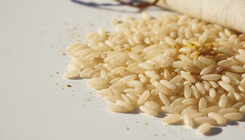
Akshat—unbroken rice grains—are offered in nearly every puja. You sprinkle them on an idol, place them in a deity's hand, or scatter them into a havan. They appear so simple that you might not wonder why unbroken grains matter, or why rice specifically. The reason runs deeper than convenience. Akshat carries meaning in its wholeness, its sustenance, and its purity in the ritual space.
Akshat means "that which is not broken" in Sanskrit. The word itself declares the requirement: the grains must remain intact. Broken rice, which has split or fractured during processing, is never used. This emphasis on wholeness is not arbitrary. In Sanatan Dharma, wholeness symbolises completeness, auspiciousness and unbroken continuity of blessing. When you offer akshat, you are offering something perfect and unblemished to the divine. There is no pretence in it—you are not offering something damaged or leftover. The purity lies partly in the grain itself and partly in the intention behind choosing the unbroken form.



Why Rice Becomes Akshat
Rice has held sacred status in Indian ritual for thousands of years. It is the staple grain across much of India, and it sustains life. This connection between rice and nourishment made it natural to offer rice in gratitude to the divine and in prayer for continued abundance. But why specifically unbroken grains?
When rice is harvested and processed, some grains crack or split. These broken pieces are separated out and become inferior in value—cheaper, used in different contexts, or even discarded. By contrast, whole grains are perfect and rare. They represent the best of what the harvest offers. The discipline of using only akshat in puja reflects the principle that offerings to the divine must be chosen with care. You do not offer what is flawed or common; you offer what is precious and complete. This creates an action—the sorting, the selection, the conscious offering—that itself becomes an act of devotion.
The unbroken form also preserves the grain's vital essence. In Ayurveda and yogic philosophy, wholeness is associated with prana, the life force. A broken grain has lost its integrity. An unbroken grain retains its completeness, and with it a higher potency for blessing and protection.
How Akshat Appears in Different Pujas
Akshat appears in nearly every puja in some form, but its role varies by context and tradition. In daily pujas to household deities, akshat may be mixed with turmeric or vermillion powder, turning the grains yellow or red. This coloured akshat is sprinkled on the idol or placed in a small mound before the deity. The colour added does not change the purpose—it is still akshat, and the colour simply makes the offering visible and auspicious.
In more elaborate pujas to Lakshmi or Durga, akshat is offered in greater quantity. It may fill a small bowl, or be held in the worshipper's palm and offered with words of prayer. Some traditions place akshat directly into the deity's hand or lap in the murthi or image. In rites that involve water, akshat is sometimes sprinkled across water or placed on a tray that holds water offerings.
During havans (fire rituals), akshat is placed into the fire with mantras. The fire transforms it completely, and the smoke carries the offering to the divine realms. This use differs from placing akshat before an idol, but the principle is the same: the unbroken rice grain, offered with intention, becomes a vehicle for prayer.
Regional and sampradaya traditions vary in how much akshat is used and exactly when it is offered in sequence. In some traditions, akshat is offered early in the puja, immediately after the deity is invoked. In others, it is scattered over the deity near the end, as part of aarti or final blessings. The variation reflects different understandings of when the offering has greatest potency, but the grain itself remains constant.
The Symbolism of Wholeness
At the deepest level, akshat represents an intention. Every grain is whole. None is divided or partial. This mirrors the ideal of the worshipper's own mind in puja—brought together, focused, complete. You are not offering your scattered thoughts or half-hearted attention; you are offering yourself fully to the moment of worship.
Wholeness also speaks to continuity. An unbroken grain of rice holds within it the capacity to grow into a new plant, to regenerate life. When you offer akshat, you are offering not just a moment of gratitude, but a wish for continuous blessing, for flourishing that does not stop. The grain represents something that carries life forward.
The choice of akshat over broken rice is also an act of truthfulness. You are not pretending that something damaged is complete. You are acknowledging a difference between what is whole and what is fractured, and you are choosing to offer the whole. This clarity—this refusal of pretence—itself becomes a form of honesty in prayer.
Preparing and Obtaining Akshat
Akshat should be rice that is clean, dry and stored properly. It is best purchased from a source where you know the rice has been handled carefully and kept free from moisture and insects. If you buy akshat already prepared and mixed with turmeric, ensure it has been stored in a dry place and smells fresh. Some worshippers prepare their own akshat at home by cooking plain white rice very lightly, drying it thoroughly, and then storing it in a clean jar. This ensures you know the source and that the grain remains unbroken through the process.
If turmeric or vermillion is to be mixed with the akshat, add it just before use. This keeps the colour vibrant and prevents the powder from caking over time. A small container of akshat kept in your puja room or prayer space is sufficient for daily use. There is no need to buy in large quantities; fresh, well-maintained akshat is more valuable than old stock.
What to Do When Akshat Is Not Available
If you are unable to obtain akshat, do not delay your puja. Whole rice grains are preferred, but if they are not available to you, broken rice can be used. The intention and sincerity of your worship matter far more than the exact form of the offering. Some traditions have used other whole grains—millet, sesame seeds, or even small quantities of sugar—in situations where rice was not available. What matters is that you offer something clean, whole if possible, and given with devotion. The puja is not invalidated by substitution made with good intention.
Over time, as akshat becomes easier to obtain or prepare, you can return to the traditional form. The principle is that you offer what you can, honestly and with care.
Common questions
Can I use broken rice instead of akshat?
Broken rice is not traditionally used in puja, as akshat's meaning lies in its wholeness. However, if whole grains are genuinely unavailable to you, broken rice can be substituted with sincere intention. Some traditions have used other whole grains like millet or sesame when rice was not accessible.
Should I buy akshat ready-made or prepare it myself?
Either approach is fine. Ready-made akshat is convenient if it has been stored properly and is fresh. If you prefer to prepare it at home, lightly cook plain white rice, dry it thoroughly, and store it in a clean, dry container. The key is that the grains remain unbroken and clean.
When in the puja should I offer akshat?
The exact timing varies by tradition and type of puja. In some practices, akshat is scattered over the deity early in the worship; in others, it is offered during aarti or blessing at the end. The specific sequence depends on your sampradaya or the puja being performed.

Related Articles


