
Ahoi Ashtami: A Mother's Fast for Her Children
Fasting for the wellbeing of all children

Aditya Pandey
20 Nov 2026 • 6min
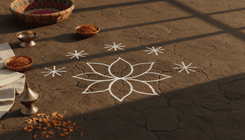
Ahoi Ashtami is a vrat, or ritual fast, that mothers observe for the health and safety of their children. It falls on the eighth lunar day (ashtami) in the dark fortnight of the month of Kartik, typically in October or November. Unlike many fasts that focus on spiritual purification, Ahoi Ashtami is rooted in maternal devotion and the desire to protect children from harm.
The fast is observed by mothers across northern and central India, particularly in regions like Uttar Pradesh, Rajasthan, Madhya Pradesh and Delhi. It is one of the few important vrats in the Hindu calendar that is not marked by a deity's birthday or a major religious event, but instead centres entirely on the relationship between mother and child.



The Story of Ahoi Mata
The fast is bound to the story of Ahoi Mata, a goddess who is said to have been wronged by a brahmin woman. According to the traditional account, a brahmin woman and a potter's wife were gathering wood together when the brahmin woman spotted a bird's nest on a tree. Mistaking it for something else, she struck it with her axe, killing seven chicks inside. The potter's wife, upset by this cruelty, scolded her.
The brahmin woman, angry at being rebuked, cursed the potter's wife: her children would suffer and die. The potter's wife was devastated. A hermit, witnessing her grief, told her about Ahoi Mata, a protective goddess who had the power to shield children from harm. The potter's wife observed the Ahoi Ashtami fast with sincere devotion.
The story ends with her children being saved and kept safe by Ahoi Mata's blessings. Ahoi Mata is understood not as a separate deity with temples and extensive mythology, but as a protective spirit or power that mothers invoke through this fast. She is drawn on the wall or floor of homes during the fast, depicted as a simple geometric figure with seven stars, representing the seven chicks and their connection to the safety of all children.
How the Fast is Observed
Mothers begin Ahoi Ashtami before dawn, bathing and preparing for the day. Many worship the image of Ahoi Mata in their home, drawn or printed on paper, and make offerings of khir (rice pudding), poori (fried bread) and other sweets. The fast is usually broken after sighting the stars in the evening, which is why it is sometimes called the star fast.
Before breaking the fast, mothers often perform a small ritual in which they light an oil lamp, place the image of Ahoi Mata in front of it, and make offerings. This moment is considered particularly auspicious. Families may gather to hear the story of Ahoi Mata retold, reinforcing the values of care and protection that the fast represents.
The fast is typically kept without food and water throughout the day, though some regions and families have gentler versions where mothers eat fruit or milk after midday. The strictness of the fast is less important than the intention behind it: mothers fast to ask for their children's wellbeing, offering their own hunger and discomfort as an expression of their love.
Regional Variations and Modern Practice
The way Ahoi Ashtami is celebrated varies across regions. In some parts of northern India, only mothers who have living children observe this fast. In other areas, grandmothers fast for their grandchildren, or aunts fast for their nieces and nephews. The core purpose remains the same: a woman's fast undertaken for the protection of the children in her care.
In some families, the fast is kept for all children in the world, not just one's own. This broader interpretation reflects the Hindu understanding that motherhood itself—the protective, nurturing impulse—is sacred and worthy of devotion. Some women extend the observance by fasting for the health and safety of children they know who are facing difficulties.
In urban homes today, the ritual is often simplified. An image of Ahoi Mata may be printed from online sources rather than drawn by hand. The feast after the fast might be made from shop-bought ingredients. Yet the fast's meaning remains unchanged: it is an act of intention and love, a way for mothers to express their deepest wishes for their children's wellbeing through their own discipline and devotion.
Why This Fast Matters
Ahoi Ashtami is unique in the Hindu calendar because it places the mother at the centre of the ritual, not a deity's story or a cosmic event. It acknowledges that the work of protecting and nurturing children is sacred work, worthy of ritual recognition. The fast is a way for mothers to be seen and honoured for what they do daily, often without ceremony or acknowledgement.
The fast also connects mothers across generations. A mother teaching her daughter about Ahoi Ashtami passes on a tradition of care and intention. In a world where motherhood can feel isolating or unrecognised, this fast offers a day set apart, a moment when a mother's work and worry are held as spiritually significant.
Children who grow up knowing that their mother observes Ahoi Ashtami for them learn something important: that they are worth someone's sacrifice, and that love takes many forms. The fast creates a bridge between the inner life of the mother—her hopes and fears for her children—and the outer world of ritual and celebration.
Common questions
When is Ahoi Ashtami celebrated?
Ahoi Ashtami is observed on the eighth lunar day in the dark fortnight of Kartik month, usually falling in October or November. Since it follows the lunar calendar, the exact date changes each year, so check a panchang or lunar calendar for the date in your region.
Can women who don't have children observe Ahoi Ashtami?
Yes. In some families, grandmothers fast for their grandchildren, aunts for their nieces and nephews, and some women fast for all children or for a child facing particular difficulty. In other traditions, the fast is kept only by mothers with living children, so practice varies by region and family.
What do you eat when you break the Ahoi Ashtami fast?
The fast is usually broken after sighting the stars in the evening. Families typically prepare khir (rice pudding), poori (fried bread), and other sweet dishes to eat once the stars appear, though regional variations exist in what is traditionally prepared.

Related Articles


