
Achamana Ritual: The Water-Sipping Purification Before Puja
Cleanse Mind and Spirit Through Sacred Sips

Aditya Pandey
10 Nov 2026 • 7min
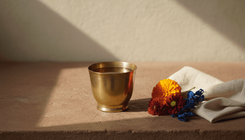
Achamana is a simple but essential purification ritual performed before puja (worship), meditation or eating. It involves sipping a small amount of water three times while reciting a mantra, and it cleanses both the physical body and the subtle self. The ritual takes only a minute or two, yet it marks a transition from ordinary daily life into a sacred space. If you have seen someone at a temple or in a home shrine pause to sip water before worship, they were performing achamana.



What Achamana Means
The word achamana comes from the root meaning "to drink" or "to sip". The ritual purifies you through water, which in Hindu philosophy represents cleansing, renewal and the divine flow of shakti (cosmic energy). Achamana prepares both body and mind: it washes away external impurities and refocuses your attention inward, toward the sacred act you are about to perform. You are not simply drinking water; you are entering a state of ritual readiness.
In the Vedas and the Dharma Shastras (texts on conduct), achamana is mentioned as one of the essential sandhyavandana practices—the rituals that mark the transitions of day. It appears in texts on puja, on guest hospitality, and on the conduct required before eating. The practice is woven through daily life in many Hindu households, yet it remains accessible to anyone, regardless of caste, sampradaya (tradition) or prior experience.
How to Perform Achamana
You will need clean water in a vessel—a small cup, a conch shell, or your cupped palm. The water should be cool and fresh, and ideally from a natural source, though tap water is acceptable if that is what you have.
Sit comfortably, facing east if possible, and hold the vessel or your palm at chest level. Bring the water to your lips and take the first sip while reciting the mantra Om apavitrah pavitro va sarvavastham gato'pi va / Yah smaret pundarikaksham sa bahyabhyantarah shucih. This mantra comes from the Skanda Purana and asks that remembrance of the lotus-eyed Lord (Vishnu) purify us inside and out, regardless of outward circumstance.
Take two more sips with the same mantra, or with each sip recite the names of sacred waters: Ganga, Yamuna, Saraswati, Sindhu, Kaveri. Some traditions add Narmada, Godavari and other rivers holy to their region. As you sip, the idea is to direct your mind inward and remember the sacred.
After the three sips, many practitioners touch their face and chest with their wet fingers, or rinse their mouth with a fourth small sip. The water that remains in your vessel should be respectfully poured into a plant or the earth, not discarded casually. In some traditions, after achamana you also touch the three lines of vibhuti (sacred ash) or tilak (a mark worn on the forehead), or whisper a personal mantra or prayer that centers your intention for the puja to come.
Regional and Sampradaya Variations
Achamana varies by tradition and region, though the core remains the same: three sips with intention and mantra. In South Indian practice, particularly in Vaishnavite sampradayas, achamana often precedes sandhyavandana and is performed with the recitation of Vedic mantras. In North Indian practice, the ritual may be briefer and more informal, though no less meaningful.
Some traditions prescribe different mantras or add additional steps. In certain communities, women who are menstruating may skip achamana or perform it differently, following local custom. The Smartha tradition, which draws from multiple Vedic schools, performs achamana as part of daily sandhyavandana at dawn and dusk, while Vaishnavite and Shaivite traditions may emphasize it differently according to their own texts and lineage.
What matters is that you perform the ritual with awareness and respect. Even if you do not know the Sanskrit mantra, sipping water with the simple intention of purifying yourself and preparing for worship is valid. Many people recite the mantra in their regional language, or simply hold the intention in their heart.
When and Where to Perform Achamana
You perform achamana before puja or any formal worship, whether at home or in a temple. You also perform it before eating, particularly if you are about to take prasad (sanctified food offered to the deity) or eat after fasting. In some traditions, achamana is done after meals as well, as an act of gratitude and completion.
The ritual can be done at any time of day, in any place where you have access to clean water. In a temple, you may perform it at a designated tank or fountain. At home, any cup or vessel works. If you are traveling or do not have water available, some traditions teach that you can perform achamana with the same intention and mantra, using the gesture of bringing your palm to your mouth even without water, or visualizing the sacred waters. The external form matters less than the sincerity of your intent.
Common Mistakes and Points to Remember
A common mistake is to rush through achamana or to treat it as a mere mechanical action. The ritual works because it engages your mind and prepares your whole being for worship. If you are distracted or careless, the benefit diminishes. Even if you have only a few seconds, take them fully.
Another question that arises: what if the water is not from a sacred source, or what if you forget the mantra? The answer is that achamana purifies through intention and sacred action, not through the perfection of external conditions. Water from your tap is sufficient. If you do not know the mantra in Sanskrit, speaking it in your own language, or simply holding the thought that you are purifying yourself as you sip, is enough. Many practitioners new to the ritual find it helpful to learn the mantra gradually rather than memorizing it all at once.
Also remember that achamana is not a substitute for ordinary cleanliness. You should wash your hands and face with water before performing it. Achamana is a ritual action that follows physical hygiene and works alongside it, not instead of it.
How to Perform Achamana
- Gather clean water Fill a small cup, shell or your cupped palm with fresh, clean water. Sit comfortably, preferably facing east.
- Recite the mantra Hold the water at chest level and bring it to your lips. Recite the achamana mantra: Om apavitrah pavitro va sarvavastham gato'pi va / Yah smaret pundarikaksham sa bahyabhyantarah shucih, or remember the names of sacred rivers like Ganga and Yamuna.
- Take the first sip Sip a small amount of water while reciting the mantra. Direct your mind inward and focus your intention on purification.
- Take the second sip Sip again, repeating the mantra or the sacred river names. Your attention should remain steady and inward.
- Take the third sip Take the final sip with the same mantra or intention. This completes the core of the ritual.
- Complete the ritual Touch your face or chest with wet fingers if you wish, or rinse your mouth with a fourth small sip. Respectfully pour any remaining water onto a plant or into the earth.
Common questions
What if I don't know the Sanskrit mantra for achamana?
You can recite the mantra in your regional language, or perform achamana simply with the intention to purify yourself before worship. The ritual's power comes from sincere intention and mindful action, not from perfect Sanskrit pronunciation.
Can I perform achamana with tap water?
Yes. While traditionally achamana uses water from sacred sources like rivers, tap water is acceptable if that is what you have available. What matters is your focus and intention as you perform the ritual.
When should I perform achamana besides before puja?
You perform achamana before eating, especially before taking prasad or eating after a fast, and some traditions also do it after meals as an act of completion. It can be done any time you wish to enter a state of ritual readiness.

Related Articles


