
Aadi Perukku: Honouring Rivers in the Tamil Month of Aadi
Water flows with gratitude

Kushal K
16 Nov 2026 • 6min
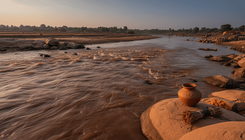
Aadi Perukku is a Tamil harvest festival celebrated on the tenth or eleventh day of the month of Aadi to give thanks to rivers for bringing water and prosperity to the land. Observed primarily in Tamil Nadu and parts of southern India, this festival honours the seasonal flooding of rivers—especially the Kaveri—which replenishes the soil for the coming harvest season. Unlike many other festivals, Aadi Perukku is rooted not in mythology but in the direct relationship between people and the rivers they depend on.



When Aadi Perukku is Observed
The month of Aadi in the Tamil calendar typically falls between mid-July and mid-August in the Gregorian calendar. Aadi Perukku is celebrated on a specific lunar day: the tenth or eleventh day after the new moon in Aadi, known as Dasami or Ekadashi tithi. Because the Tamil calendar follows the lunar cycle, the exact date changes each year in the Gregorian calendar.
The festival is timed to coincide with the monsoon season when rivers swell with rainfall. In the agricultural communities of Tamil Nadu and neighbouring regions, this was—and remains—the season when rivers like the Kaveri reach their peak flow, bringing life-giving water to irrigated fields. The festival marks this annual renewal as a moment worth celebrating and honouring.
The Significance of Rivers in Tamil Culture
Rivers have always held a central place in South Indian life and spirituality. The Kaveri, the Tamirabarani, the Godavari and other rivers are not merely water sources but are seen as divine beings worthy of respect and gratitude. In Tamil literature, rivers are often personified and addressed as mothers who nourish the land.
Aadi Perukku emerged as a way for farming communities to mark the arrival of seasonal water and to offer thanks before the main harvest work began. The festival acknowledges that without the river's bounty, the next season's grain would not grow. This is a practical spirituality, rooted in the observation that life depends on water and seasons.
The "Perukku" in the name comes from the Tamil word meaning "to increase" or "to swell," directly referring to the rising water levels of the rivers during monsoon. The festival celebrates this swelling as both a natural phenomenon and a blessing.
How Aadi Perukku is Celebrated
Aadi Perukku is observed with simple, direct offerings to rivers. People gather at river banks, tanks (artificial ponds) and water sources in their villages and towns. They make offerings of sugarcane, bananas, rice, turmeric and other agricultural produce—foods that represent the harvest season and the fertility the river enables.
In many households, women prepare special dishes and carry them to the river or water source. The food is offered as gratitude, and then shared among family members and others present. No elaborate rituals or mantras are required; the core of the celebration is the act of approaching the water, making an offering, and speaking thanks.
Some communities prepare small boats from banana stems or leaves carrying offerings and let them float on the water as a symbolic sending of gratitude downstream. In other places, people pour the river water over themselves and their fields as a blessing and act of renewal. The practices vary by region and family custom, but all share the intention of acknowledging the river's role in sustaining life.
In temples near rivers, special poojas (worship rituals) are sometimes held to honour the river deity. Devotees visit these temples to participate in prayers and receive blessings. However, the festival is fundamentally a community observance at water sources rather than a temple-centred event.
Regional Variations
While Aadi Perukku is most strongly rooted in Tamil Nadu, similar river-honouring festivals are observed in other South Indian regions during the same season. The specific customs, timing and names vary, but the underlying practice of giving thanks to rivers for monsoon water is widespread.
In some communities, Aadi Perukku overlaps with or is linked to other harvest-related observances in the Tamil month of Aadi. Families may combine river worship with home rituals or offerings to other deities. The interpretation of the festival can be shaped by local tradition, sampradaya (lineage practice) and family custom.
The foods offered also reflect local agriculture. In regions where sugarcane is a major crop, sugarcane stalks feature prominently in offerings. In other areas, different produce may be chosen based on what is harvested or ripening at that time of year.
Why Aadi Perukku Matters Today
In an age of dams, canals and engineered water systems, Aadi Perukku reminds us of the older relationship between communities and the rivers they live alongside. It is a festival about dependence and gratitude—about acknowledging that human flourishing is not separate from the natural world but is woven into it.
For many Tamil families, Aadi Perukku remains a lived practice. It is a day to visit a river or water source, to pause and remember where food comes from, and to express thanks for abundance. Even in urban areas, people find ways to observe it, sometimes making offerings at temples or in homes with water vessels that represent rivers.
The festival also speaks to current concerns about water scarcity and river health. In honouring rivers during Aadi Perukku, communities are affirming their commitment to these water sources and their place in sustaining life. It is a practice that sits comfortably with efforts to protect and restore rivers today.
Common questions
Can I celebrate Aadi Perukku if I don't live near a river?
Yes. While visiting a river or tank is the traditional practice, many people celebrate by making offerings to water sources at home—a bowl or vessel of water can represent the river. Some families make offerings at temples near water sources or participate in community gatherings, and the intention of gratitude is what matters most.
Is Aadi Perukku only about the Kaveri River?
No. While the Kaveri is the most celebrated river in Tamil Nadu, Aadi Perukku honours all rivers and water sources in the region, including the Tamirabarani, Godavari and local tanks and wells. The festival is about giving thanks to whatever water sources sustain your community.
What if it doesn't rain heavily during monsoon that year?
The festival is still observed, as it marks the traditional season of river renewal rather than the actual water level on any given year. People offer gratitude for the rains that do come and for the river's role in their lives, regardless of seasonal variation.

Related Articles


