
A Gentle Morning Yoga Routine Rooted in Tradition
Wake with the sun, rise with intention

Sunil Chaurasia
19 Nov 2026 • 7min
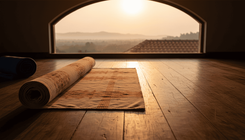
A morning yoga routine is not just exercise; it is a way to greet the day with presence, energy and calm. The traditional way begins with sun salutations, which align your practice with the rhythm of nature, and continues with gentle standing poses and seated stretches. Done slowly and with awareness, a morning yoga routine prepares your body and mind for what lies ahead—without rushing, without straining, without the pressure of a performance class.
This approach has roots deep in the yoga tradition. The earliest yoga texts describe practices meant to prepare the body for meditation, not to build muscle or achieve difficult poses. A morning routine honours that purpose: it wakes you gently, clears mental fog, and settles you into your own centre before the day's demands arrive.



Why morning yoga matters
A morning practice sets the tone for everything that follows. When you move your body and regulate your breath before breakfast, before checking messages, before the world's urgencies take hold, you are choosing how to begin. Your nervous system shifts from sleep into a state of calm alertness. Blood flows more freely. Your joints and muscles warm gradually. Your mind settles.
This is why many people report that a morning yoga routine stays with them throughout the day. It is not that the asanas—the poses—last until evening. Rather, the quality of attention you bring to your early practice becomes a habit of mind. You find yourself more present, more patient, less reactive. You have already chosen your own pace once today, and that choice becomes easier to repeat.
A morning routine also works with your body's natural rhythms. Your cortisol—the hormone that helps you wake and mobilise—peaks in the early hours. Gentle movement amplifies this natural rise without shocking your system. By contrast, intense exercise first thing can be jarring, and a rushed or forced practice can set an anxious tone.
Surya Namaskar: the foundation
Surya Namaskar, or Sun Salutation, is the heart of most traditional morning sequences. A series of twelve linked poses, it flows with your breath: one movement per inhalation or exhalation. As you move, you acknowledge the sun and the life it brings—a gesture of gratitude that transforms simple exercise into something more meaningful.
The sequence warms every major joint and engages both strength and flexibility. Your shoulders open, your spine bends forward and back, your hamstrings lengthen, your core engages. By the time you finish a few rounds, your body feels awake and your mind feels clearer.
You do not need perfect form or advanced strength. Each pose has gentler versions. Your hands can stay on the earth longer in the plank position. Your knees can touch the ground. You can step back instead of jumping. The purpose is to move with your breath and attention, not to achieve a picture-perfect pose. A teacher or a trusted video showing modifications is helpful when you are learning the flow.
Most people find that three to five rounds of Surya Namaskar form a complete short practice—perhaps ten to fifteen minutes. This is enough to wake the body without leaving you breathless or sore. If you have more time, you can add standing poses afterward.
Gentle standing poses to follow
After Surya Namaskar, standing poses like Tadasana (Mountain Pose), Trikonasana (Triangle), and Utthita Parsvakonasana (Extended Side Angle) bring steadiness and confidence into your body. These poses strengthen your legs and open your hips in ways that are especially valuable if you sit at a desk during the day.
The key is gentleness. Hold each pose for only five to eight breaths. Do not strain into a deeper stretch. Your aim in a morning practice is to move, to lengthen, and to notice—not to force your body further than feels right. Over weeks and months, your flexibility will naturally increase.
Pay attention to your breath. If you are holding your breath or gasping, you have gone too far. Breath should remain smooth and even. When breath becomes difficult, ease back. This simple rule—let your breath guide your depth—prevents injury and makes the practice feel sustainable.
Seated stretches and closing poses
Finish with five to ten minutes of seated or reclined poses. Sitting forward bends like Paschimottanasana (Seated Forward Bend) calm the nervous system and stretch the backs of your legs. Twists like Ardha Matsyendrasana (Half Lord of the Fishes) massage your organs and release tension along the spine. Legs-up-the-wall pose or reclined poses give your body time to settle.
End in Shavasana (Corpse Pose) for just two or three minutes. Lie flat, let your arms rest by your sides with palms up, and let your feet fall open. Your only task is to breathe and to notice. This is not napping; it is conscious rest. It allows your nervous system to absorb the practice and gives your mind a taste of the quiet that yoga offers.
Building a routine that lasts
The best morning yoga routine is one you will actually do. Start small—even ten minutes is enough. Do the same sequence most mornings so your body learns it and your mind settles into the familiar rhythm. You do not need novelty; repetition is where the real benefit lives.
Choose a consistent time, if you can. If you always practice at 6 a.m., your body will come to expect it and wake more easily. If your schedule varies, practice whenever you can manage, and do not let a missed day discourage you from returning the next morning.
A dedicated space helps, even if it is just a corner of a room. Roll out your mat in the same spot each day. This simple ritual tells your mind that something intentional is beginning.
Finally, remember that a morning yoga routine is an act of self-care, not self-punishment. Some mornings you will feel energised and strong. Other mornings your body will feel stiff or your mind foggy—and those are often the mornings when a gentle practice helps most. Trust the tradition. Show up with kindness toward yourself. The routine will meet you where you are, every single day.
A Simple Morning Yoga Routine
- Begin with Surya Namaskar Stand at the top of your mat. Move through 3-5 rounds of Sun Salutation, linking each pose to your breath. This takes 10-15 minutes and warms your entire body.
- Move through standing poses Flow through Tadasana, Trikonasana, and Utthita Parsvakonasana, holding each for 5-8 breaths. Move slowly and let your breath guide how deep you go into each pose.
- Sit for forward bends and twists Spend 5-10 minutes in seated poses like Paschimottanasana and gentle spinal twists. These calm your nervous system and release tension.
- Close with Shavasana Lie flat on your back with legs relaxed and arms by your sides, palms up. Rest here for 2-3 minutes and simply breathe, letting your mind settle.
Common questions
How long should a morning yoga routine take?
A simple routine with Surya Namaskar, a few standing poses, and closing stretches takes 20-30 minutes. You can do a shorter version in 10-15 minutes with just Sun Salutations and Shavasana, or spend 45 minutes if you have more time.
Can I do a morning yoga routine if I'm stiff or sore?
Yes—a gentle morning practice often helps stiffness more than resting does. Move slowly, hold poses for fewer breaths, and use modifications like bending your knees or keeping your hands on the ground. If you have pain or an injury, check with a teacher or your doctor first.
Does morning yoga have to include Surya Namaskar?
No. Surya Namaskar is traditional and efficient, but you can build a morning practice from gentle standing poses, seated stretches and breathing work alone. The foundation is moving with awareness and breath, not the specific poses you choose.

Related Articles


